← All work
Machine learningMar — Jul 2026Final Year Project

LSTM Gas Detection

Detecting hazardous gas leaks with 99.84% accuracy.

99.84%
accuracy
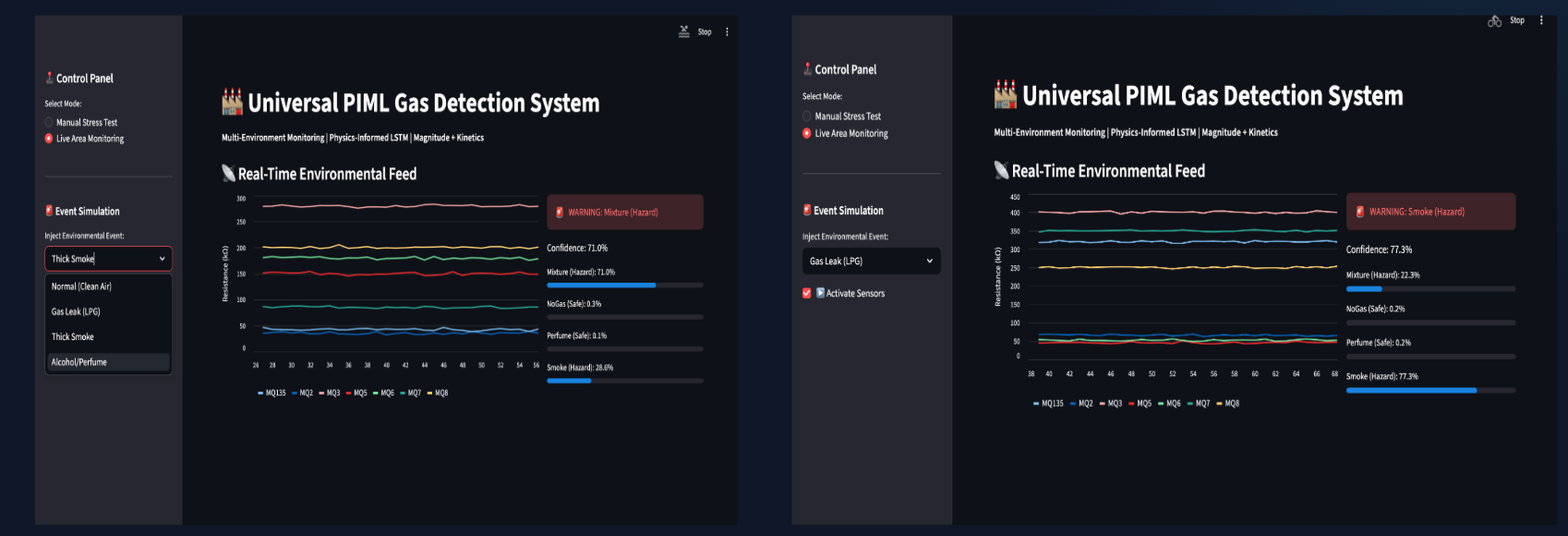
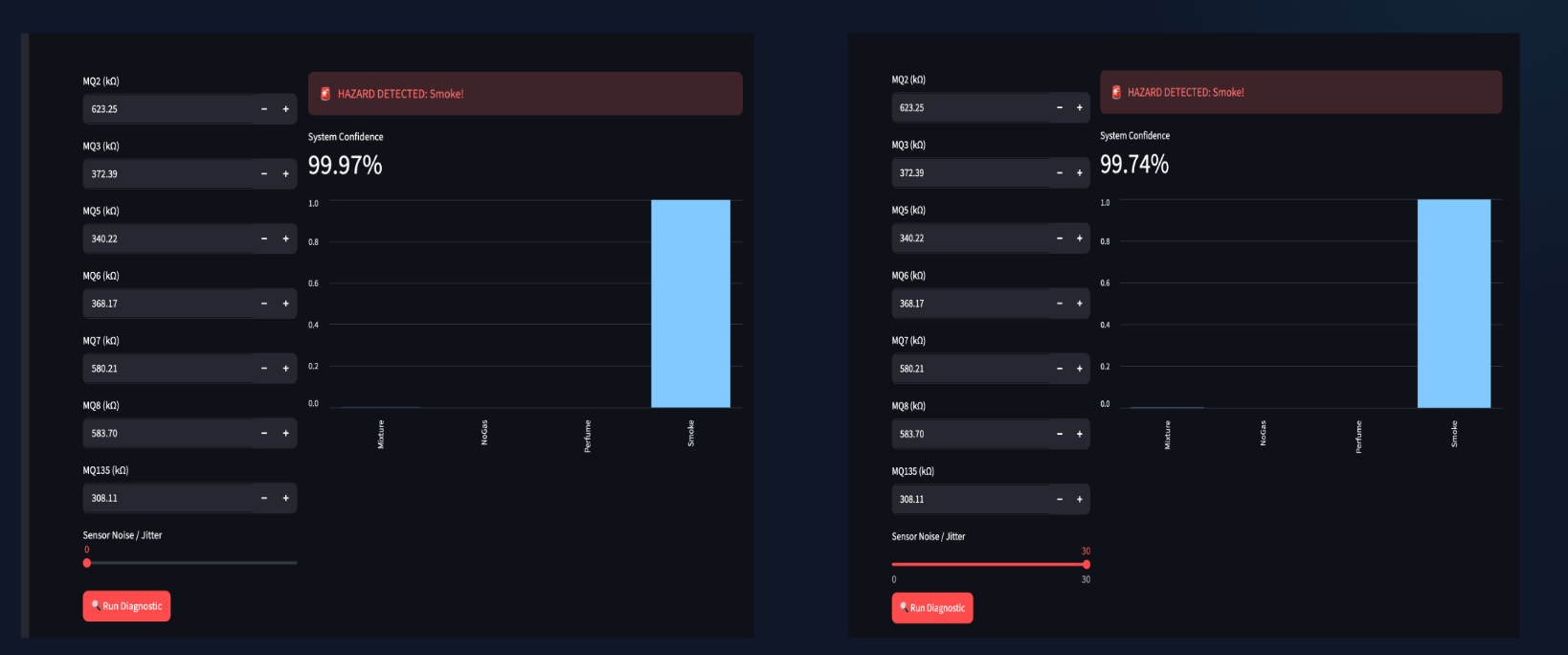
Gas detection prototype showing live sensor feeds and hazard predictions
Live monitoring · sensor feeds and hazard predictions during simulated environmental events.
Smoke diagnostics comparing zero and increased sensor noise
Smoke diagnostics · model confidence with and without added sensor noise.
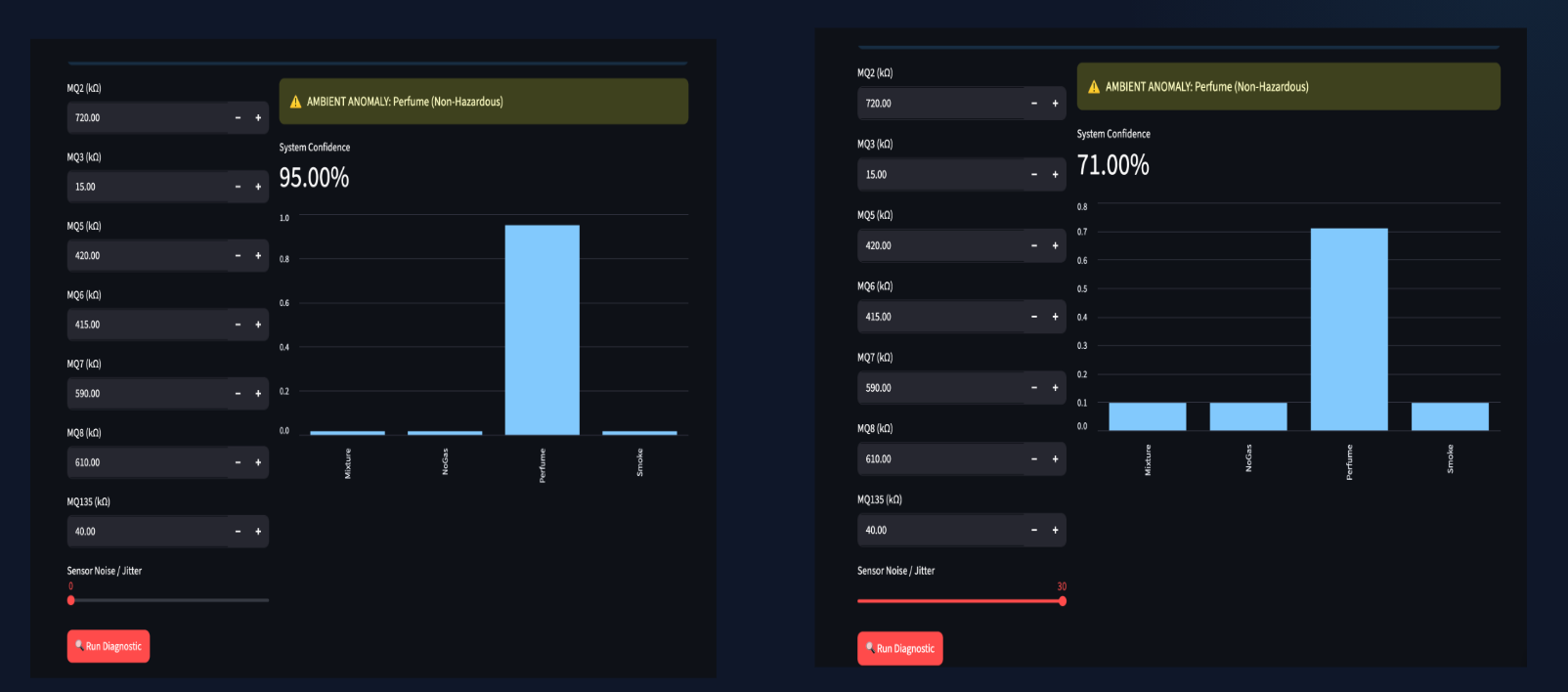
Non-hazardous perfume diagnostics comparing zero and increased sensor noise
Perfume diagnostics · distinguishing a non-hazardous anomaly under different noise conditions.
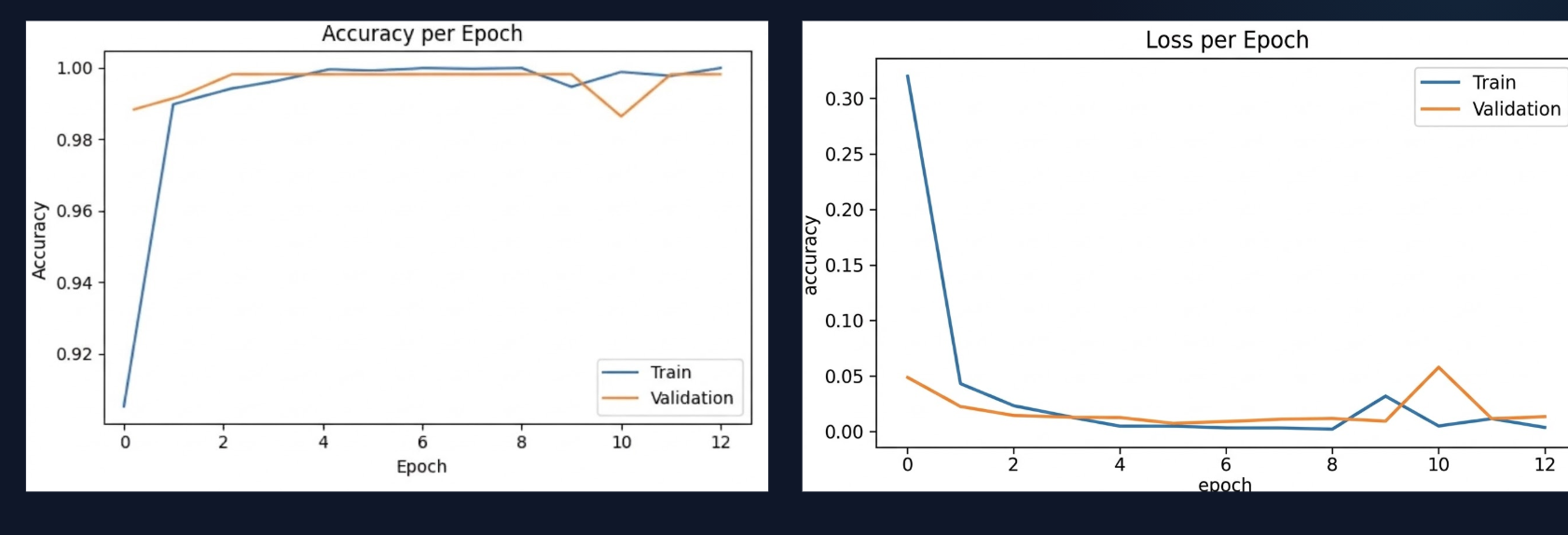
Training and validation accuracy and loss across 13 epochs
Training curves · accuracy and loss across training and validation runs.
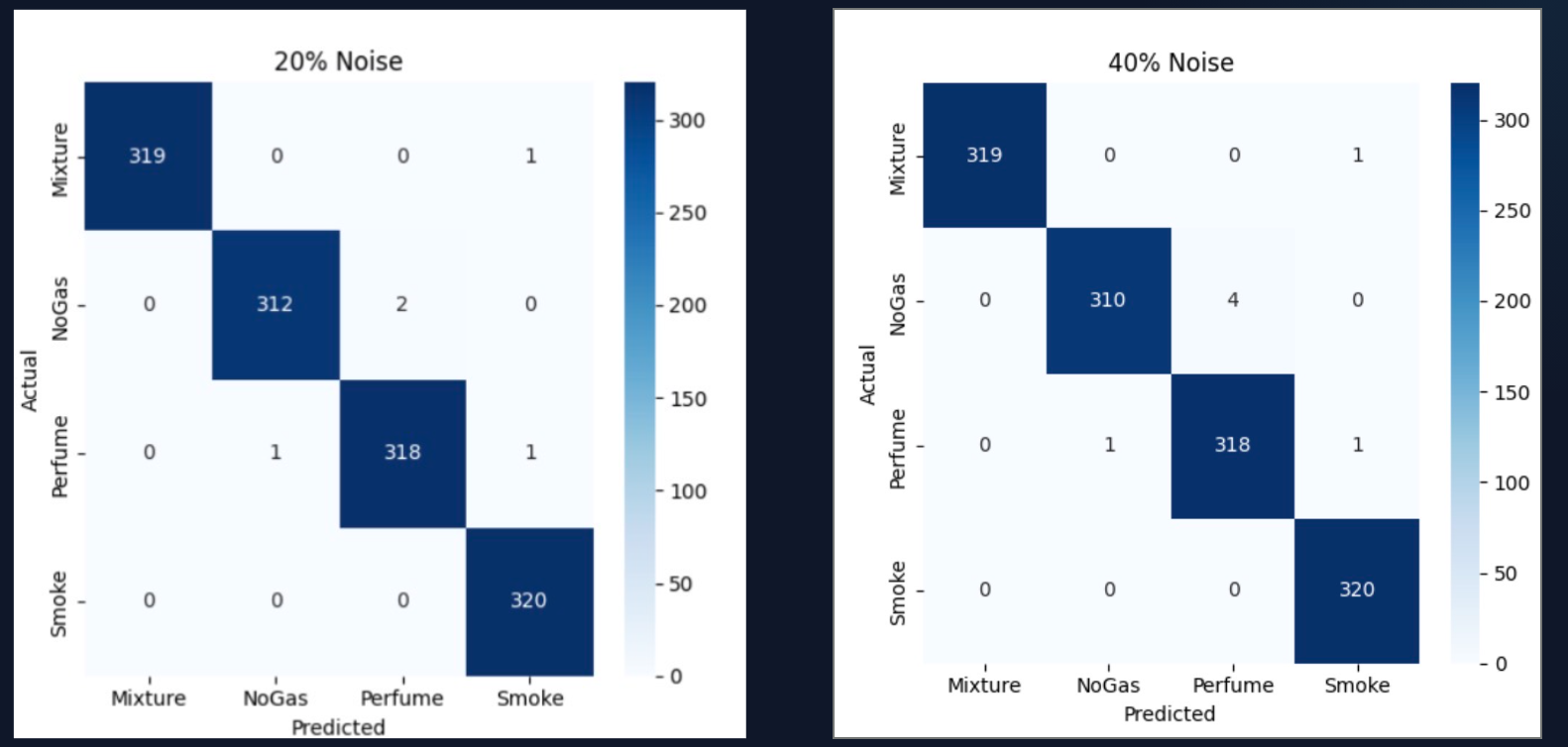
Confusion matrices at 20 percent and 40 percent noise for mixture, clean air, perfume and smoke
Noise robustness · confusion matrices at 20% and 40% noise.
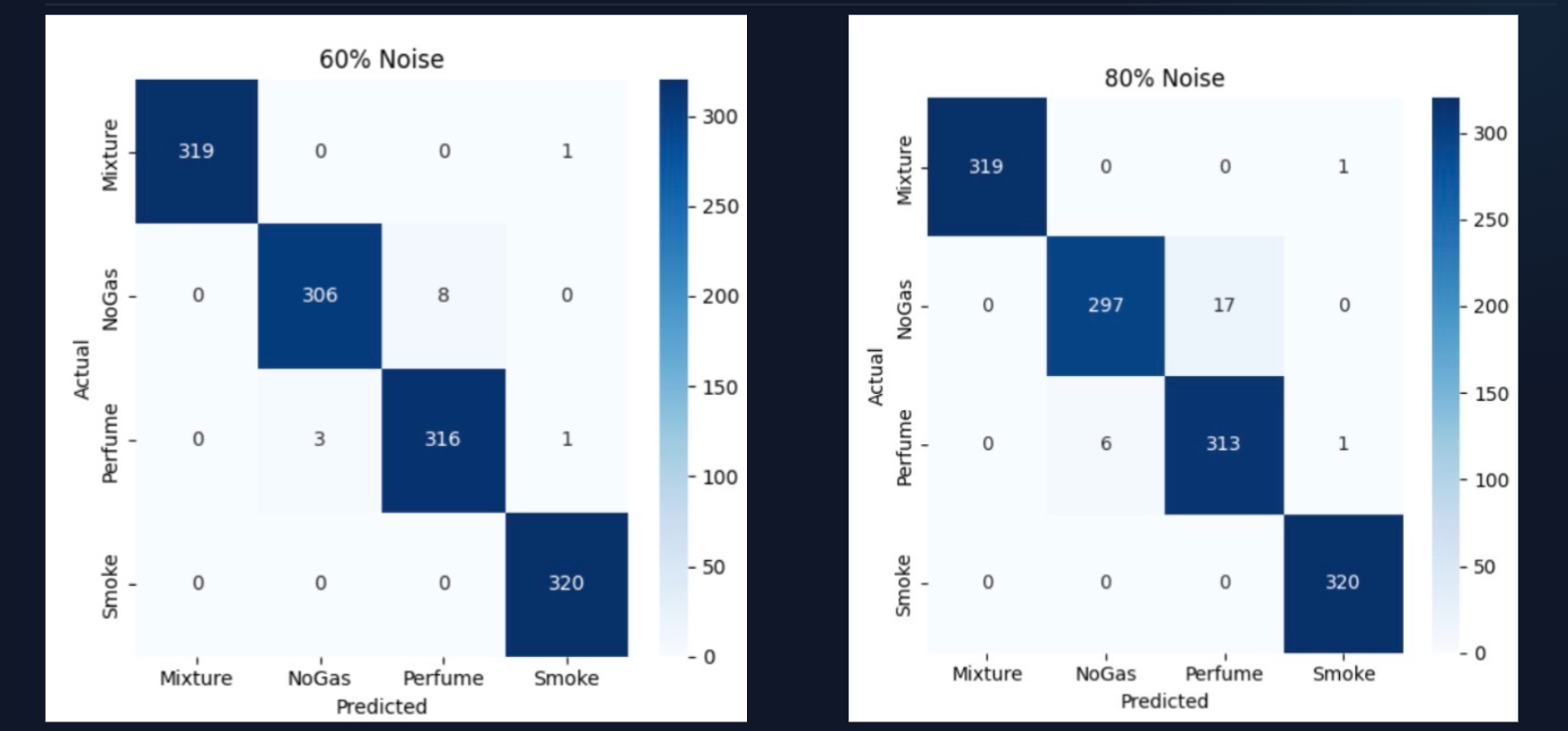
Confusion matrices at 60 percent and 80 percent noise for mixture, clean air, perfume and smoke
Noise robustness · confusion matrices at 60% and 80% noise.
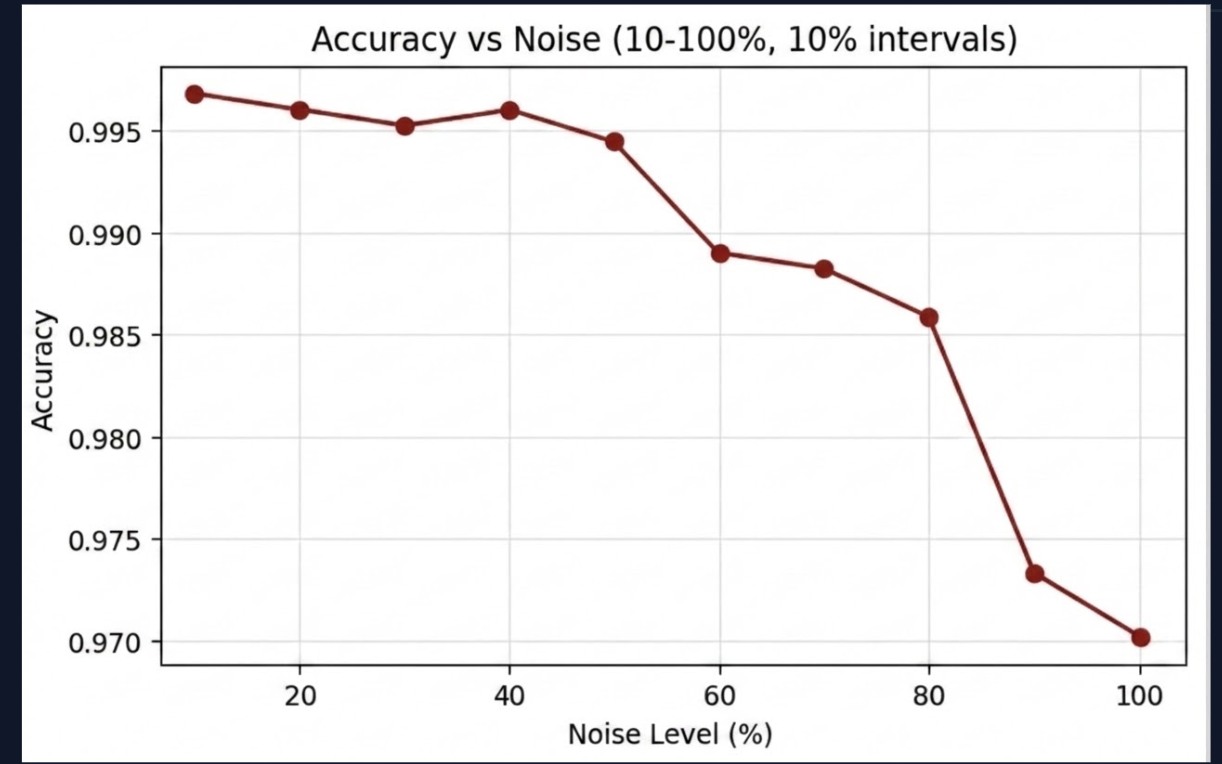
Model accuracy plotted against noise levels from 10 to 100 percent
Stress testing · accuracy across increasing noise levels, from 10% to 100%.
01

The problem

Industrial sites need early warning of hazardous gas, and sensor data is noisy time-series that simple thresholds miss.

02

How I approached it

  1. 1.Preprocessed and analysed time-series sensor data in Python.
  2. 2.Built a full TensorFlow/Keras LSTM training and validation pipeline.
  3. 3.Integrated predictions into a prototype monitoring system.
03

What shipped

LSTM classification modelTraining & validation pipelinePrototype hazard monitor
Next project
Wine Quality ML →